Off-Page SEO is one of the most frequently tested topics in digital marketing interviews. Whether you’re a fresher preparing for your first SEO role or an experienced professional aiming for a senior position, interviewers consistently check how well you understand backlinks, domain authority, digital PR, brand signals, and current link-building practices.
This blog covers the Top 50 Off-Page SEO interview questions and answers, ranging from basic definitions to advanced strategic concepts. Every answer comes with a short, practical example so you can understand not just the theory but how it applies in real SEO work. Whether you’re starting out or brushing up before an interview, this guide reflects current, up-to-date link-building practices rather than outdated tactics.
Off-Page SEO Interview Questions Table of Contents
- Basic Off-Page SEO Questions
- Backlink Building Questions
- Technical & Metrics Questions
- Social Media & Brand Questions
- Advanced Off-Page SEO Questions
1. Basic Off-Page SEO Questions
1. What is Off-Page SEO?
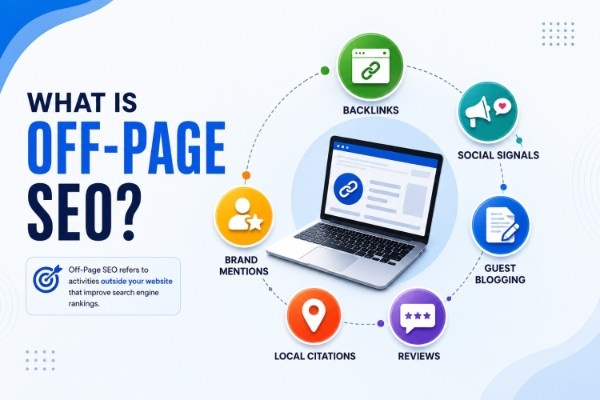
Answer: Off-page SEO includes activities performed outside your website that can strengthen its search visibility, authority, reputation, and online presence. Common examples include earning relevant backlinks, digital PR, brand mentions, local citations, reviews, and strategic outreach.
Example: A reputable marketing website links to your SEO guide as a useful resource.
2. How is Off-Page SEO different from On-Page SEO?
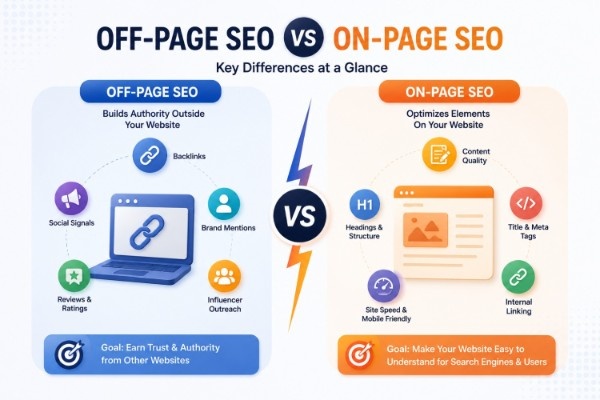
Answer: On-Page SEO involves optimizing elements within your website, such as content, titles, and internal linking. Off-Page SEO focuses on external factors like backlinks, mentions, and reputation signals that build trust and authority from outside sources.
If you’re also preparing for the on-page side of an SEO interview, review these On-Page SEO interview questions and answers for practical examples and key concepts.
Example: Optimizing a page’s title tag is On-Page; earning a link from an industry blog is Off-Page.
3. Why is Off-Page SEO important?
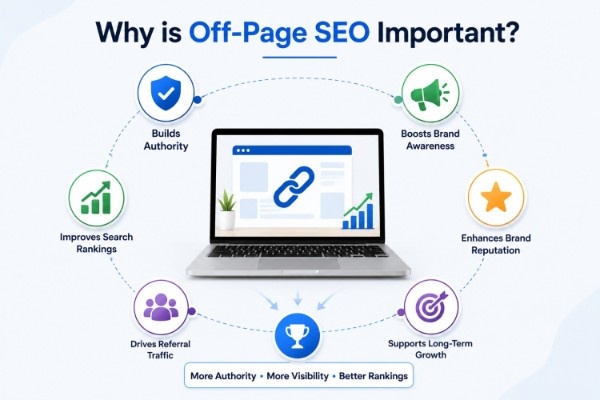
Answer: It helps search engines gauge a website’s credibility, authority, and trustworthiness through external validation. A few highly relevant and authoritative backlinks can be more valuable than hundreds of low-quality or irrelevant links.
Example: One link from a respected industry publication can outweigh dozens from unrelated, low-quality sites.
4. What is a backlink?
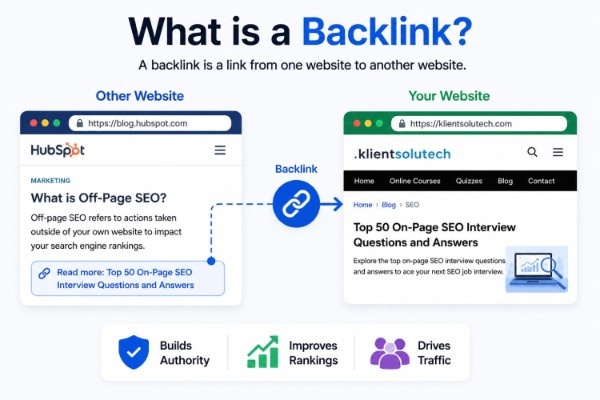
Answer: A backlink is a link from one website to another website. Search engines can use relevant and authoritative backlinks as signals when understanding a page’s credibility and importance. However, backlink quality and relevance are generally more important than simply building a large number of links.
Example: A technology blog links to your article about the best project management tools.
5. What are the types of backlinks?
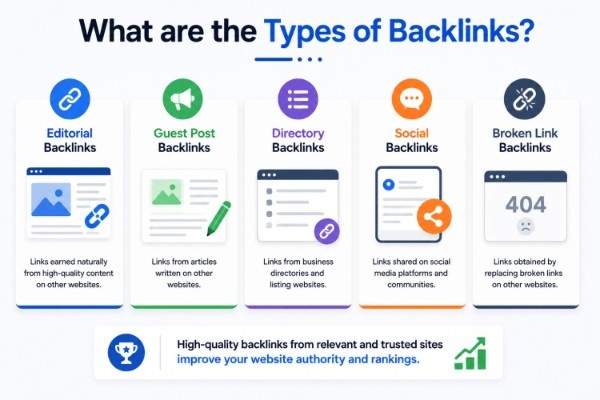
Answer: Backlinks can include standard links (often informally called dofollow), as well as links qualified with nofollow, sponsored, or ugc attributes. These attributes help search engines understand the nature of a link. Naturally earned editorial links from relevant and trustworthy websites are generally the most valuable for SEO.
Example: A naturally earned editorial link may be a standard link, while a paid promotional link should generally be qualified with the sponsored attribute.
6. What is Domain Authority (DA)?
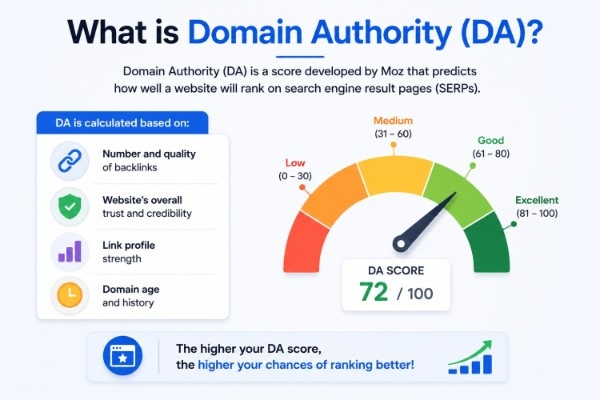
Answer: Domain Authority (DA) is a third-party SEO metric developed by Moz that predicts a website’s potential ability to rank in search results. It is measured on a scale from 1 to 100. Domain Authority is a third-party Moz metric and is not an official Google ranking factor.
Example: You can compare your website’s DA with competitors while evaluating backlink opportunities.
7. What is Page Authority (PA)?
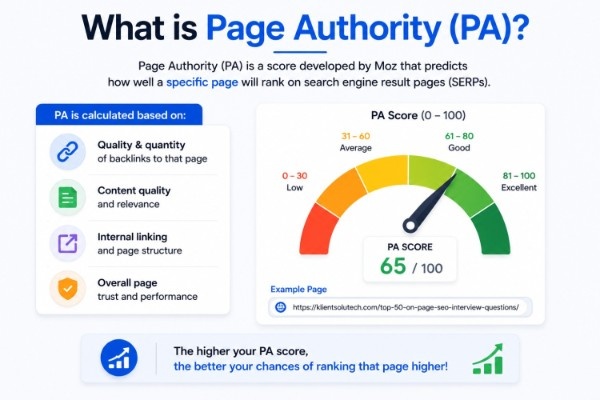
Answer: Page Authority is a similar Moz metric to DA, but it predicts the ranking potential of a specific page rather than an entire domain, based on its own backlink profile.
Example: A single blog post can have a higher PA than the site’s homepage if it has more quality links.
8. What is Anchor Text?
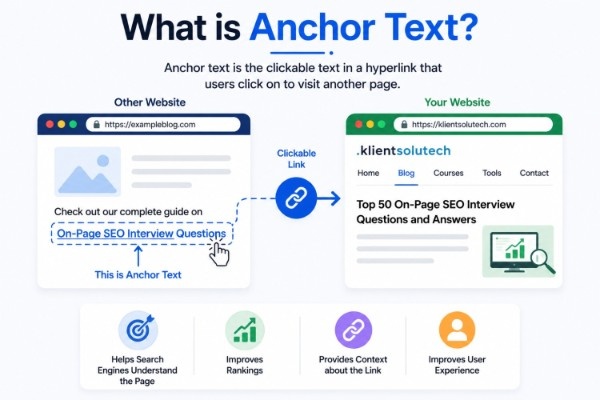
Answer: Anchor text is the visible, clickable text of a hyperlink. It gives both users and search engines context about what the linked page is about.
Example: Best SEO Tools 2026 as clickable text linking to a tools comparison page.
9. What are the types of Anchor Text?
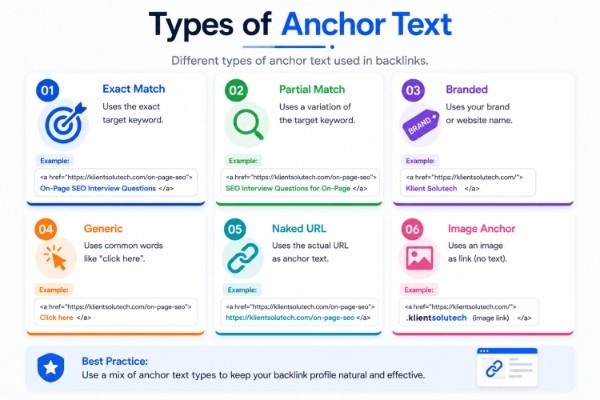
Answer: Common types include exact match, partial match, branded, generic, naked URL, and image anchor text. A natural backlink profile usually contains a healthy mix rather than relying heavily on one type.
Choosing natural anchor text also depends on understanding different types of keywords in SEO, including branded, exact-match, and related keyword variations.
Example: Nike shoes is exact match; Nike’s official site is branded.
10. What is Link Juice?
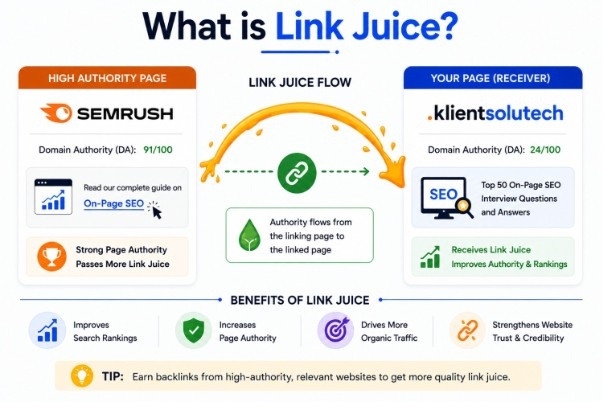
Answer: Link juice refers to the ranking value or authority passed from one page to another through a hyperlink. Factors like the linking page’s authority, relevance, and placement affect how much value is passed.
Example: A link placed within the main content typically passes more value than one in a footer.
2. Backlink Building Questions
11. What is Guest Posting?
Answer: Guest posting involves writing content for another relevant website, usually in exchange for a byline, brand exposure, and a backlink. It works best when the content is genuinely useful and the site is topically relevant.
Example: Writing an article on SEO Trends 2026 for a marketing blog with a link back to your site.
12. What is Broken Link Building?
Answer: This technique involves finding dead or broken links on other websites and reaching out to suggest your relevant content as a replacement, creating value for both parties.
Example: Finding a 404 error on a resource page and pitching your updated guide as a replacement.
13. What is the Skyscraper Technique?
Answer: This strategy involves finding top-ranking content on a topic, creating something more comprehensive or updated, and then reaching out to sites linking to the original piece.
Example: Improving an outdated “SEO Checklist” article and pitching it to sites linking to the old version.
14. What is Link Baiting?
Answer: Link baiting means creating highly valuable, shareable content such as original research, tools, or infographics that naturally attracts backlinks without direct outreach.
Example: An interactive salary calculator that industry blogs reference and link to organically.
15. What is a PBN (Private Blog Network)?
Answer: A PBN (Private Blog Network) is a network of websites created or controlled primarily to build links to a target website and manipulate its search rankings. Using PBNs for ranking manipulation violates Google’s spam policies and can result in manipulative links being ignored or other actions being taken against the site.
Example: A business buys several expired domains, publishes low-value content on them, and links all of those sites to its main website to artificially influence rankings.
16. What is Blog Commenting for SEO?
Answer: Genuine blog comments can help with community participation, relationships, and referral traffic, but mass commenting purely to create backlinks is outdated and considered a spammy, low-value practice today.
Example: Leaving a thoughtful comment on an industry blog that sparks a follow-up conversation with the author.
17. What is Directory Submission?
Answer: This involves listing your website or business on relevant online directories. The focus should be on legitimate, relevant directories and local citations; mass submissions to low-quality directories solely for backlinks are not a recommended modern strategy.
Example: Listing your business accurately on Google Business Profile and a trusted industry directory.
18. What is Social Bookmarking?
Answer: Social bookmarking involves sharing your website’s content on bookmarking platforms to increase visibility and referral traffic. It is not considered a strong or reliable backlink-building strategy on its own today.
Example: Sharing a new blog post on a niche community platform to reach interested readers.
19. What is Forum Posting?
Answer: Forum posting means participating in niche communities like Quora or Reddit. The focus should be genuine, helpful participation that builds brand visibility and referral traffic not posting links purely to create backlinks.
Example: Answering a detailed question on Quora and naturally mentioning your resource where relevant.
20. What is Influencer Outreach?
Answer: This involves partnering with industry influencers or content creators to promote your brand, content, or products, often resulting in mentions, backlinks, and increased referral traffic.
Example: A niche YouTuber reviewing your product and linking to it in the video description.
3. Technical & Metrics Questions
21. What is a Toxic Backlink?
Answer: Toxic backlink is a term commonly used by third-party SEO tools to describe links they consider suspicious, spammy, or potentially harmful. Google does not use a public toxic backlink score. The main SEO concern is whether links are part of manipulative practices intended to influence search rankings.
Example: An SEO tool may flag links from spammy or irrelevant websites as toxic, but they should be evaluated individually rather than removed or disavowed automatically.
22. How do you disavow toxic links?
Answer: Google’s Disavow Tool allows you to submit a list of domains or URLs you want search engines to ignore. However, it is not a routine backlink cleanup tool. It should generally be considered only when there is a significant pattern of artificial or manipulative links and you have a strong reason to believe they are causing or may cause a manual action.
Example: Using the Disavow Tool after identifying a clear spam link pattern tied to a ranking drop.
23. What is Link Velocity?
Answer: Link velocity refers to the rate at which a website acquires backlinks over time. A sudden increase in backlinks is not automatically harmful; the source, relevance, and reason behind the growth matter more than speed alone.
Example: A viral research report may naturally earn hundreds of links within a few days.
24. What is a natural backlink profile?
Answer: A natural backlink profile shows naturally acquired links from diverse and relevant sources, with varied anchor text and link attributes, resembling organic link acquisition rather than a manipulated pattern.
Example: A mix of editorial, branded, and attribute-varied links from different relevant websites.
25. What is the Google Penguin Update?
Answer: Google Penguin was launched in 2012 to combat link spam and manipulative link-building practices. In 2016, Penguin became part of Google’s core ranking systems and is now considered a historical system rather than a separate Google update.
Example: Websites that relied heavily on manipulative or spammy link-building practices could lose search visibility as Google’s systems became better at identifying link spam.
26. What is E-E-A-T?
Answer: E-E-A-T stands for Experience, Expertise, Authoritativeness, and Trustworthiness. It is a framework discussed in Google’s Search Quality Rater Guidelines for evaluating the quality and trustworthiness of content. E-E-A-T itself is not a specific Google ranking factor or a measurable SEO score.
Example: A medical article written or reviewed by a qualified healthcare professional, supported by reliable sources, and published on a transparent website can demonstrate strong E-E-A-T qualities.
27. What tools do you use to check backlinks?
Answer: Common tools include Ahrefs, SEMrush, Moz Link Explorer, and Ubersuggest, each offering insights into referring domains, anchor text, and link quality.
Example: Using Ahrefs to audit a competitor’s backlink profile before planning outreach.
28. What is a referring domain?
Answer: A referring domain is a unique website domain that links to your site, regardless of how many individual links come from it. Referring domains are often considered more meaningful than total backlink count.
Example: Ten links from one domain count as one referring domain, not ten.
29. What’s the difference between link building and link earning?
Answer: Link building typically involves proactive outreach to acquire links, while link earning happens naturally when content is valuable enough that others link to it without being asked.
Example: A widely shared original research report earning links without any outreach.
30. What is Co-citation and Co-occurrence?
Answer: These refer to a brand or website being mentioned near a topic or competitor without a direct hyperlink. This is considered a conceptual signal related to topical relevance rather than a confirmed, standalone Google ranking factor.
Example: Your brand being mentioned alongside competitors in an industry comparison article, even without a link.
4. Social Media & Brand Questions
31. Do social media signals directly impact rankings?
Answer: Social signals are not considered a direct, confirmed Google ranking factor, but they increase content visibility and traffic, which can indirectly lead to more backlinks and mentions.
Example: A post that goes viral on LinkedIn leads other blogs to discover and link to it.
32. What is a Brand Mention (unlinked mention)?
Answer: An unlinked brand mention occurs when your brand is referenced online without a hyperlink. These mentions are valuable for reputation and can sometimes be converted into backlinks through outreach.
Example: A news article mentioning your company’s name without linking to your website.
33. How do online reviews affect Off-Page SEO?
Answer: Reviews on platforms like Google and Trustpilot build trust signals that support reputation and can indirectly support local and organic search visibility.
Example: A restaurant with consistent positive Google reviews building stronger local trust and visibility.
34. What is a Local SEO citation?
Answer: A local citation is a mention of your business’s Name, Address, and Phone number (NAP) on external websites or directories, helping establish local relevance and consistency.
Example: Listing consistent NAP details across Google Business Profile and a local directory.
35. What role does Google Business Profile optimization play in Off-Page SEO?
Answer: An optimized Google Business Profile supports local visibility through reviews, accurate business information, and citations, complementing broader off-page efforts.
Example: Regularly updating business hours and responding to reviews on your Google Business Profile.
5. Advanced Off-Page SEO Questions
36. How do you conduct competitor backlink analysis?
Answer: This involves using tools like Ahrefs or SEMrush to identify where competitors earn links, evaluating those sources for relevance and authority, and targeting similar or stronger opportunities.
Example: Discovering a competitor’s feature on an industry blog and pitching your own story to the same site.
37. What is a Link Gap Analysis?
Answer: A link gap analysis compares your backlink profile against competitors to identify domains linking to them but not to you, revealing untapped outreach opportunities.
Example: Finding five industry blogs linking to two competitors but not to your site.
38. How do you prioritize which backlinks to pursue?
Answer: Prioritization should be based on relevance to your niche, the linking site’s authority and traffic, and trustworthiness rather than chasing high DA numbers alone.
Example: Choosing a moderately-authoritative, highly relevant niche blog over an unrelated high-DA site.
39. What is Digital PR in SEO?
Answer: Digital PR involves earning high-authority backlinks and mentions through press coverage, journalist outreach, and newsworthy campaigns like original research or data studies.
Example: Getting featured in an industry publication after pitching a data-driven report.
40. What is journalist outreach in link building?
Answer: Journalist outreach involves connecting with reporters and writers often through platforms or direct pitching to offer expert commentary or data in exchange for coverage and citations. It remains a widely used white-hat link-building method, though the specific platforms and practices continue to evolve.
Example: Providing expert insight for a journalist’s article in exchange for a citation and link.
41. How do you measure the success of an Off-Page SEO campaign?
Answer: Success is measured through a mix of KPIs: quality referring domains gained, relevant backlinks, referral traffic, organic visibility, keyword rankings, brand mentions, and leads or conversions where measurable. DA/DR can be used as a supporting third-party metric rather than the primary goal.
Example: Tracking a rise in referral traffic and keyword rankings after a digital PR campaign.
42. What is a link roundup?
Answer: A link roundup is a curated article or resource that highlights useful content, tools, news, or guides from multiple sources within a particular niche. Creating genuinely valuable content can increase the chances of being included in relevant roundups.
Example: An SEO website publishes a weekly Best SEO Reads roundup and includes a link to your original industry research because it provides useful information to its audience.
43. What is Link Spam?
Answer: Link spam refers to links created primarily to manipulate search rankings rather than provide genuine value to users. Examples include buying or selling links for ranking purposes, excessive link exchanges, automated link creation, and other manipulative link-building practices.
Example: Buying hundreds of keyword-rich backlinks from unrelated websites solely to artificially improve search rankings.
44. What is negative SEO and how do you protect against it?
Answer: Negative SEO refers to attempts by third parties to harm another website’s search performance through malicious or manipulative tactics. For suspicious backlinks, avoid reacting to every spammy link automatically. Monitor your backlink profile and Google Search Console, investigate unusual patterns, and consider Google’s Disavow Tool only when there is a substantial pattern of manipulative links and a genuine reason to believe they may cause a manual action.
Example: If hundreds of suspicious links suddenly appear, investigate their source and check Google Search Console for manual actions before deciding whether further action, such as disavowal, is necessary.
45. What is the role of Wikipedia backlinks?
Answer: Wikipedia generally qualifies external links with nofollow. These links shouldn’t be pursued primarily for ranking benefits, but legitimate citations can provide referral traffic, visibility, and credibility.
Example: Being cited as a source on a relevant Wikipedia article, driving visibility and brand credibility.
46. What is a link wheel?
Answer: A link wheel is an outdated link-building scheme in which multiple websites are deliberately interconnected to pass ranking signals to a target website. When created primarily to manipulate search rankings, this type of linking can violate Google’s spam policies.
Example: Several websites are created and strategically linked to one another, with each also linking to the same target website in an attempt to artificially improve its rankings.
47. How does E-commerce Off-Page SEO differ from a blog’s strategy?
Answer: E-commerce Off-Page SEO often emphasizes product PR, publisher mentions, product reviews, influencer collaborations, and editorial links, while blogs typically rely more on guest posting and content-driven outreach.
Example: A product being reviewed and linked to by a niche tech publication.
Off-page promotion is only one part of e-commerce growth; understanding the broader importance of SEO for online store websites can help build a more complete organic search strategy.
48. What is topical authority in the context of Off-Page SEO?
Answer: Topical authority refers to being recognized through citations, backlinks, and mentions as a credible, expert source within a specific niche or subject area.
Example: A finance blog frequently cited by other sites as a go-to resource on investment basics.
49. How do Google core updates and spam policies affect Off-Page SEO strategies?
Answer: Core updates and spam policies push sites to earn genuine backlinks from relevant, trustworthy sources rather than relying on volume or manipulative link schemes, reinforcing the importance of quality over quantity.
Example: A site relying on manipulative link schemes may lose search visibility when Google’s spam systems detect and neutralize those practices.
50. What’s your process for a monthly Off-Page SEO report?
Answer: A typical report includes new backlinks and referring domains, lost backlinks, link quality and relevance, anchor text distribution, referral traffic, organic visibility trends, competitor link gaps, and leads or conversions where measurable, with DA/DR included as secondary supporting data.
Example: Highlighting five new high-quality referring domains and one lost link needing follow-up in a monthly report.
🎯 Ready to Test Your SEO Knowledge?
Take our free SEO quiz and see how much you really know.
Final Tips for Off-Page SEO Interviews
- Support your answers with real, practical examples interviewers value clarity over textbook definitions.
- Mention tools you’ve used (Ahrefs, SEMrush, Moz) wherever relevant.
- Be ready to discuss case studies from your own work, even small ones.
- Stay updated on recent Google algorithm and spam policy updates, as this shows genuine engagement with the field.
Test Your Digital Marketing Knowledge
Ready to put your knowledge to the test? Take our free Digital Marketing Quiz and check your understanding of SEO, content marketing, social media, PPC, and other essential digital marketing concepts.
Good luck with your interview mastering these 50 questions will give you a strong, current understanding of Off-Page SEO for any discussion.