


The importance of learning AI for students has never been greater than it is today. By the time you graduate, AI will have rewritten the rules of nearly every industry you’re considering entering.
The question isn’t whether artificial intelligence will affect your career it’s whether you’ll be the one using it or the one replaced by it.
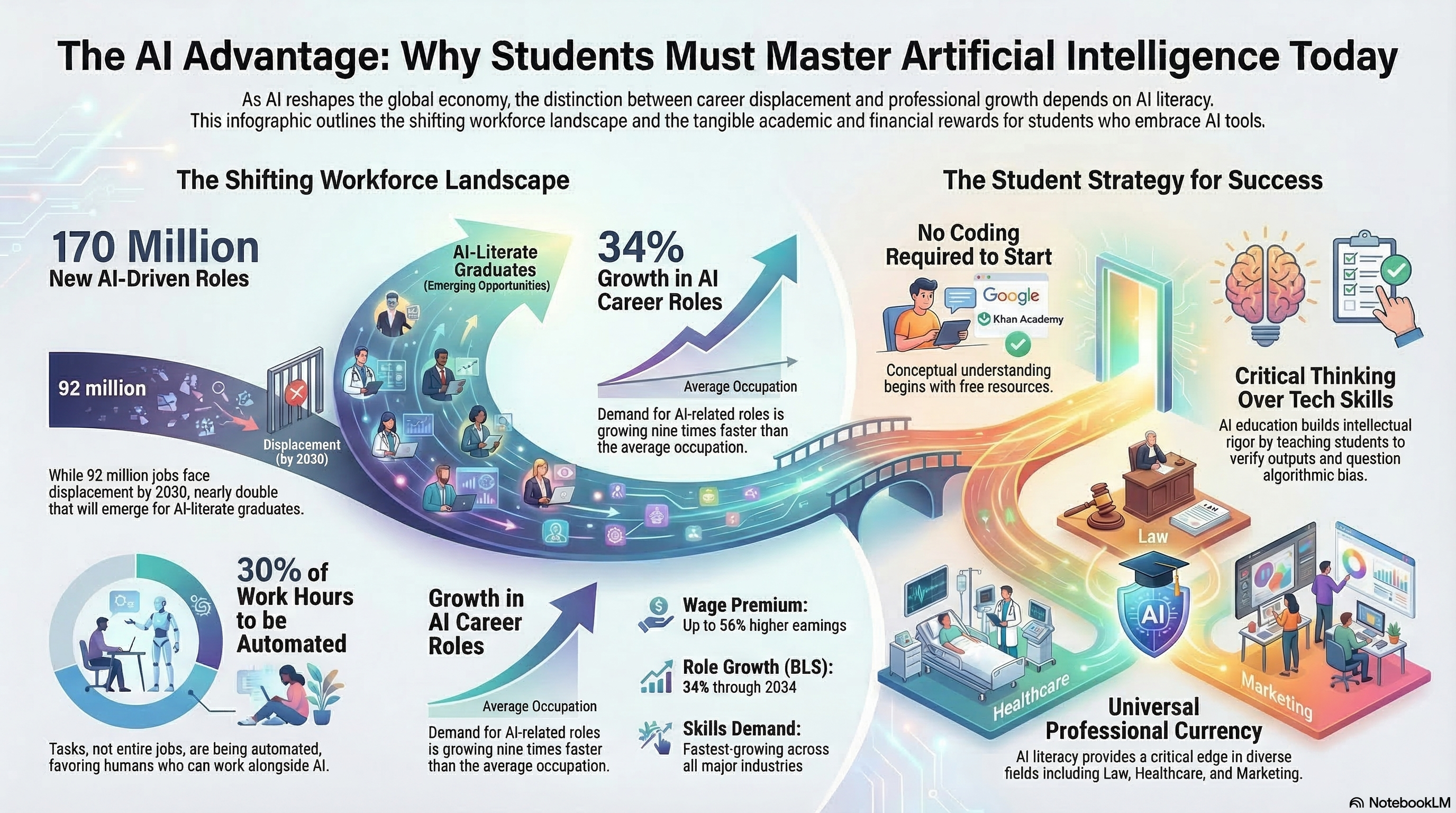
According to the World Economic Forum’s Future of Jobs Report 2025, over 92 million jobs may be displaced by AI and automation, but 170 million new roles are expected to emerge through 2030.
The difference between landing in the displaced column or the emerging one? AI literacy. This is exactly why the importance of learning AI for students is becoming impossible to ignore. For college students today, understanding artificial intelligence isn’t a bonus skill it’s the baseline.
This isn’t a post about learning to code (though that helps). It’s about understanding the importance of learning AI for students and why AI education is one of the highest-leverage investments you can make right now, regardless of your major, your career goals, or your technical background.
AI Is Already in Your Classroom Whether You Know It or Not

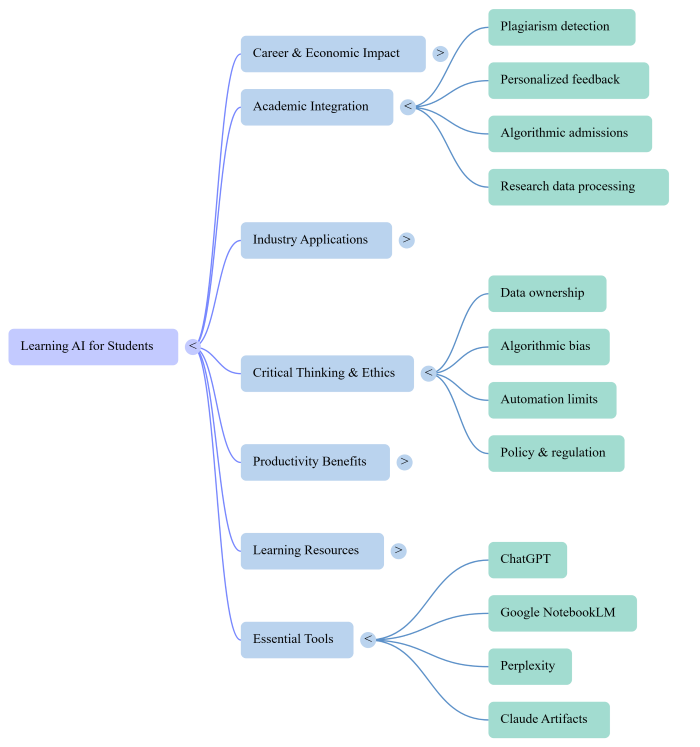
Professors are using AI to grade essays, detect plagiarism, and personalize feedback. Admissions offices use algorithmic screening. Research labs run machine-learning models to process data that would take humans decades to analyze manually.
If you’re a student in 2026, AI is already shaping your academic environment. The students thriving are the ones who understand how it works, how to use it ethically, and how to make it work for them not on them. That’s how technology has changed our lives.
Tools like ChatGPT, Google NotebookLM, Perplexity, and Claude Artifacts have gone from novelty to necessity. But using a tool and understanding the intelligence behind it are two different things. Students who understand the “why” behind AI tools use them more effectively, more ethically, and more creatively.
The Career Reality: AI Skills for College Students Are Now Table Stakes
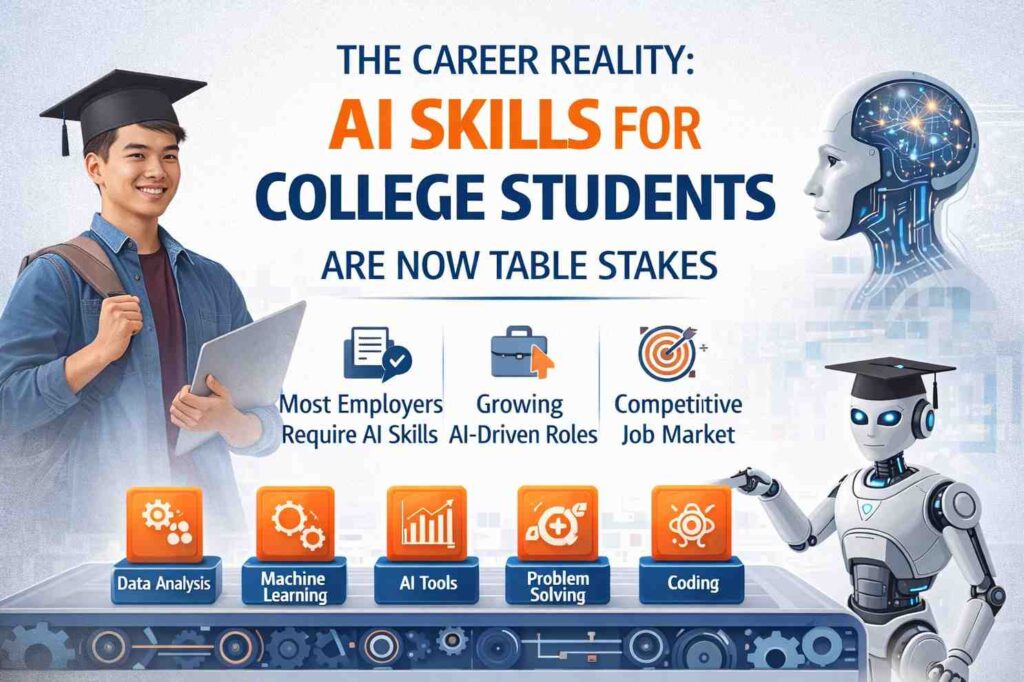
LinkedIn’s 2025 Work Change Report found that AI-related skills are among the fastest-growing in demand across every major industry finance, healthcare, marketing, law, education, and beyond. We’re not talking about a niche tech skill. We’re talking about a universal professional currency.
Furthermore, the financial stakes have risen. The 2025 PwC Global AI Jobs Barometer shows that workers with AI skills now command up to a 56% wage premium. Here’s what that looks like in practice:
- A marketing student who understands AI-powered analytics can design smarter campaigns from day one.
- A pre-med student who knows how AI assists in diagnostics enters residency with a critical edge.
- A finance student familiar with algorithmic trading and AI risk models becomes far more valuable at any firm.
- An education major who can leverage adaptive learning platforms is better equipped to serve diverse classrooms.
The importance of learning AI for students isn’t about becoming a data scientist. It’s about becoming fluent in the language your future industry will speak.
AI Literacy Goes Beyond Tech It’s Critical Thinking for the Modern Era
One of the biggest misconceptions about AI education for students is that it’s only for STEM majors. It’s not. AI raises profound questions that require humanities, social science, law, and ethics students just as urgently. Understanding AI means grappling with questions like:
- Who owns the data that trains these models?
- How do algorithmic biases get embedded and how are they challenged?
- What are the ethical limits of automation in high-stakes decisions?
- How should policy and regulation keep pace with innovation?
These aren’t hypothetical questions. They’re playing out in courtrooms, newsrooms, hospitals, and Congress right now. Students who engage with them graduate not just as professionals, but as informed citizens prepared to shape how AI is deployed responsibly.
If you’re beginners you must start with basics fast and then move towords AI, here some sources to start with: Online Basic Computer Courses – Learn Essential Computer Skills
Future of Work AI: What the Research Actually Shows
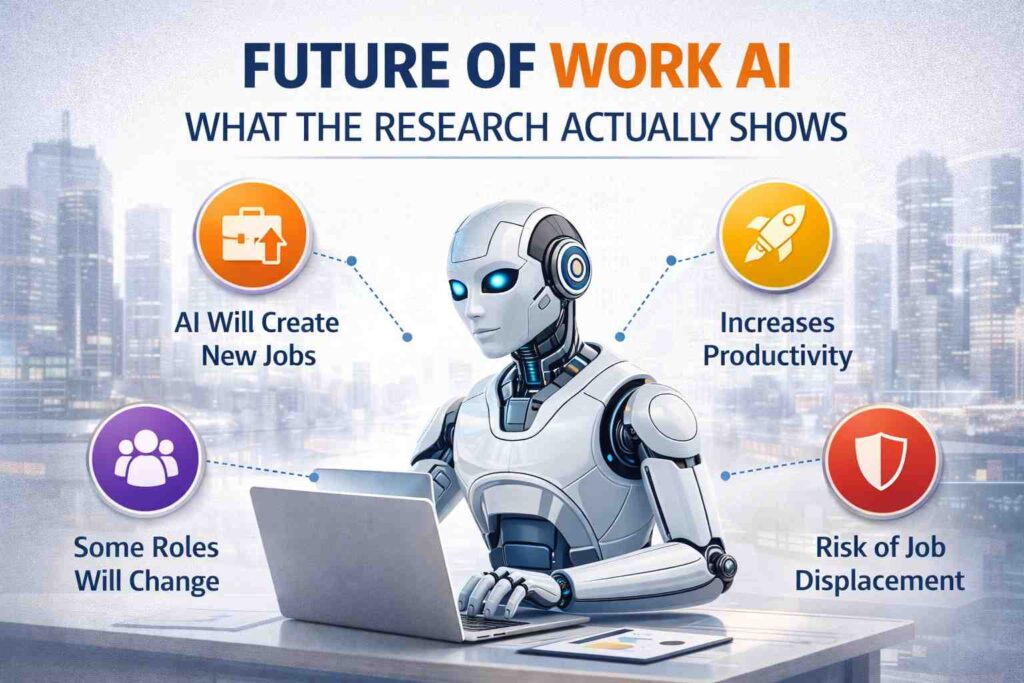
The McKinsey Global Institute estimates that up to 30% of work hours across the economy could be automated by 2030. That sounds alarming. But here’s the nuance most headlines miss: tasks get automated, not jobs and humans who can work alongside AI will have more productive capacity, not less.
MIT economist David Autor’s 2025/2026 research consistently shows that technological disruption tends to create new categories of work that complement human judgment, creativity, and interpersonal skills. The catch? You need to understand the technology to effectively leverage it.
Students who develop machine learning knowledge at the beginner level today aren’t just future-proofing a resume line. They’re building the cognitive scaffolding to adapt to whatever the next wave of innovation looks like.
AI Tools for Productivity: Learning Smarter, Not Just Harder

Let’s get practical. Beyond career prep, understanding AI makes you a more effective student right now. Students using AI tools strategically for research synthesis, study planning, writing feedback, and concept explanation are reporting measurable productivity gains.
A Stanford study on AI-augmented learning found that students who were taught how AI tools work demonstrated stronger critical evaluation of AI outputs, reducing errors and improving the quality of their final work.
The takeaway: digital skills for students aren’t just about efficiency they build intellectual rigor. Understanding the limitations of AI its hallucinations, its biases, its knowledge gaps makes you a sharper thinker. You learn to verify. You learn to question. You learn to use the tool rather than be used by it.
AI Career Opportunities: The Sectors Hiring Right Now
Here’s where AI career opportunities are exploding for graduates:
- Healthcare: AI diagnostics, drug discovery, medical imaging interpretation.
- Finance: Algorithmic trading, fraud detection, risk modeling.
- Marketing: Personalization engines, predictive analytics, content generation.
- Law: Contract analysis, legal research automation, compliance monitoring.
- Climate Tech: Energy grid optimization, climate modeling, smart infrastructure.
The Bureau of Labor Statistics (BLS) projects a 34% growth rate for data science and AI-related roles through 2034 nearly nine times the average for all occupations.
You Don’t Have to Be an Engineer to Get Started
Here’s the most important thing to understand about AI education for students: you don’t need to start with code. The field is vast, and entry points exist for every background.
Some of the best places to start completely free:
- Google’s Introduction to Generative AI (free, 45 minutes, no coding required)
- Elements of AI by the University of Helsinki a global favorite for non-technical learners
- fast.ai practical deep learning for those ready to get hands-on
- Coursera’s AI For Everyone by Andrew Ng one of the most-watched online courses ever
- Khan Academy’s AI literacy resources for conceptual foundations
Start with whichever fits your current level. The goal isn’t perfection it’s momentum. Every hour you invest in AI literacy compounds.
The Window Is Open But It Won’t Stay That Way

There’s a narrow window right now where early AI literacy is a genuine competitive advantage. Students who develop it today will enter a workforce where most of their peers are still catching up.
The importance of learning AI for students isn’t about chasing a trend. It’s about understanding the most consequential technology of your lifetime. Your career will be shaped by AI whether or not you engage with it. The only real choice is whether you’re in the driver’s seat.
Frequently Asked Questions
1. Why is it important for students to learn AI?
Learning AI is important because artificial intelligence is transforming almost every industry. Students who understand AI will have better career opportunities, higher productivity, and stronger digital skills needed in the modern workforce.
2. Do students need coding skills to learn AI?
No, students do not need coding skills to start learning AI. Many beginner AI courses focus on understanding how AI works, how to use AI tools, and how AI affects different industries.
3. What are the benefits of learning AI for students?
Some major benefits include:
– Better job opportunities
– Higher earning potential
– Improved productivity and research skills
– Strong digital and analytical thinking skills
– Ability to work with modern AI tools
4. What AI tools should students learn first?
Some popular AI tools students can start with include:
– Google NotebookLM
– Claude AI
– Perplexity AI
– ChatGPT
5. Will AI replace jobs in the future?
AI may replace some repetitive tasks, but it will also create many new jobs. Students who understand AI and learn how to work with it will have better career opportunities such as SOP bot creator, Reporting skills, AI agent expertse and varoius other. But most of the work will be Automation and Analysis.


