In this post, we’ll explore four powerful ways to create a website to sell products online, from using website builders to hiring experts. Whether you’re a small business owner or just getting started with eCommerce, we’ve got you covered.
While you can also sell products without a website through an online multi-vendor store or through social media. Selling through marketplaces is like renting a stall in someone else’s mall. You get the foot traffic, but they keep the data. By building your own site, you own the ‘land’ and the relationship with your customers.
Data is important for business success. But if you don’t sell on your own website you will not get that data such as customer email, location, keywords etc. which is important to scale up the business. And you become dependent on online marketplace websites for your business growth. And you have to pay as well to continue use.
Let’s explore all the options and tips to create a website to sell products online such as:
- Ways to create your own online store website.
- Fastest methods to create a website to sell products online.
- Website builder software.
- Tips to choose the right website builder.
- Difference between website builder or no-code platforms to create a website.
- How you can hire freelance to create your online store
- Guide to creating a website on your own or hiring someone else.
- Case studies of successful online sellers those created websites using website builders.
- And many other small but important points.
Whether you want to sell goods online from home or from factories or stores or warehouses or garages these are the best ways to create a website to start selling online.
| Method | Best For | Technical Skill | Cost | Key Advantage |
| Shopify | Serious Scaling | Low-Medium | Moderate/High | All-in-one “peace of mind.” |
| Wix | Creative Control | Low | Moderate | Drag-and-drop design freedom. |
| Squarespace | Visuals & Design | Low | Moderate | Stunning, modern templates. |
| WooCommerce | SEO & Blogging | Medium | Low/Variable | Full ownership & SEO power. |
| Custom Code | Enterprise/Unique | High | Very High | 100% unique functionality. |
| No-Code | Rapid Prototyping | Medium-High | Moderate | Custom features without code. |
1. Create a website on your own by using Website Builders to Sell Products Online:

If you have good basic computer and web skills you can easily create a website on your own by using website builders for online eCommerce platforms. You do not need to hire any website designer or developer when using Website builders.
But yes if you want a custom or more high quality or professional-looking website that you think you can’t do even after watching video tutorials then you can hire website builder experts.
Else you can do it by following free video tutorials or by doing online courses. And if you face any problem then search for that on Google or Bing.
In traditional ways to sell products on your own platform online, you need a domain, hosting, responsive design or mockups and search engine optimization, product images, payment gateway, marketing strategy, and reliable sources at an affordable cost.
But today, you do not have to manage all of those things. These things are easily managed through the website builder dashboard.
Anyone can create any type of eCommerce website and start selling online within days or even hours. The best and fastest method to sell products online is to use an eCommerce website builder.
What is an eCommerce website builder or eCommerce platform?
eCommerce Website Builders are dynamic and functional websites. These are drag-and-drop methods to create websites. Also called eCommerce website builder software or eCommerce platform.
These websites were not created using any other website builder. Rather it is made using programming languages and web technologies such as HTML, CSS, JavaScript, Python or PHP and MySQL or Mongo DB, and integration of various types of business API’s.
A website builder is the best option to create your own online store website quickly, easily, and within budget and start selling. These are no-code eCommerce platforms. Just with the use of a mouse or the use of drag and drop options on the layout you can create and edit your online store website even from your mobile phone.
eCommerce website builders are best for those small business owners or sellers who do not want to manage web hosting, payment gateways, inventory apps, and various other web technologies.
eCommerce website builder software is an easy-to-use solution for business owners and especially for those who do not want daily complexity and technical hassles.
While many people and business owners have been using eCommerce platforms and website builders for years. And if you are skeptical about the options of website builders for the online stores then you can create a demo account or signup for free.
And when satisfied, then you can buy or upgrade to a pro account or premium eCommerce options. Everything from the domain, hosting, design, and templates you can manage within. You do not have to pay for hosting and many other options separately.
Things to consider before you choose any one of the below Website Builder:
- Evaluate the features and capabilities that you want in your website such as product management, payment integrations, and shipping options.
- Assess the scalability potential of the website builder and its ability to accommodate your future growth plans. So that in the future if you want to add more products or expand your reach or want to sell globally you can do that without migrating to another website builder or CMS platform.
- Consider your level of technical expertise and the level of customization you require. If you need extensive customization or have complex requirements then chose custom development instead of website builder software.
If you’re not much aware of website builders then read this post: Top 10 Pros and Cons of Using Website Builder Software
Top 5 Website Builders for Modern Sellers
This is a list of the top 5 website builders that you can use to create a website to start selling your products online. While there are many others, we have selected some of the best.
These are the popular website builders used by small business owners to sell products online. Some of the best are below with case studies that you can use any one of these to sell products online.
1. Wix.com – The All-In-One Creative Powerhouse
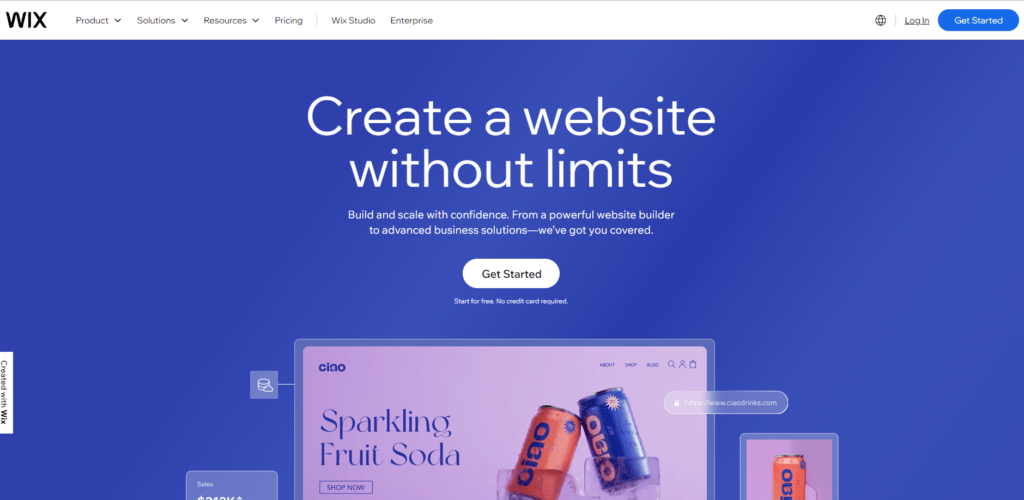
Wix is a cloud-based leader in the “no-code” space. As of 2026, it has moved beyond simple templates to a full AI-powered ecosystem. With over 900+ designer-made templates and a new AI conversational builder, you can go from an idea to a live store in under 30 minutes.
Why Wix is powerful for 2026 sellers:
- AI Design & Copy: You no longer start with a blank screen. Wix AI generates your initial layout, product descriptions, and even social media captions.
- Total Creative Freedom: Unlike Shopify or Squarespace which use “fixed grids,” Wix lets you move any element pixel-by-pixel.
- Wix Studio: For those who need professional-grade speed and advanced SEO, Wix Studio now provides enterprise-level tools that rival custom-coded sites.
Facts and Data to Help You Decide:
- Market Position: Wix is the 2nd most popular website builder globally (13% market share), making it a very safe and reliable choice for long-term business.
- Regional Popularity: It remains a top choice in the US, UK, and India, meaning you will find plenty of local support and freelancers (Wix Experts) in these regions.
- The “Switch” Factor: While some users search for “Wix to WordPress” for more technical control, Wix has closed this gap by improving its site speed (Core Web Vitals) significantly in the last two years.
Pro-Tip: Use the “Wix Owner” App
If you are selling from a warehouse or on the go, the Wix Owner App is a game-changer. You can manage inventory, chat with customers live, and even fulfill orders directly from your phone.
You will get both free and paid plans with Wix. In the free plan, you will get basic features but paid plans have more advanced features, payment methods, and third-party integrations to create professional websites.
The current tagline of Wix is “Create Websites Without Limits”. This is also visible because you get an abundance of templates and editing options with Wix.
This means that while creating any kind of website, you will never feel that you had to make some changes but are unable to do so.
There is no limit to creativity when building a website. If you also want to fulfill more editing and creative purposes in website design, then you can try it.
Facts and Data that will help you to choose Wix as your website builder or not?
- Wix 31.04% of traffic from the US, 24.81% in the UK, 24.48% from India – According to the similarweb, January 2023 overview data.
- The “How to create a website in Wix” keyword monthly search volume of 100 to 1K according to the google keyword planner (Feb 2022 to Jan 2023) and there are many other similar keywords. Overall, I think 1000+ people/business owners studying or learning or interested to create a website in Wix.
- But there are also keywords “Wix to WordPress” that people are also searching for.
- And for “Wix designer” – 100 – 1K
Overall Wix is popular and professional in what you get with it. But there is also confusion about which one is best Wix or Squarespace or Shopify especially when it’s about eCommerce builders.
While I suggest you compare the pricing and feature on your own as per your business needs and budget. But the five methods that you can use to make the right decision of choosing Wix or any other are the following: Note (Please try all of these on other website builders shared in this list or when choosing any one of your favorites).
- Try to find the contact of those who used Wix to build their eCommerce store. Ask about their experiences.
- The 2nd thing you can do is find the Wix use case studies.
- Watch the videos and tutorials related to Wix eCommerce and watch the features.
- You can also do testing through the Wix trial version.
- You can also consider seeing freelance projects or jobs related to Wix. That will help you to understand what kind of problems or opportunities other Wix users (small business owners) are getting.
Examples of websites built with Wix:
- CeliaB – Fashion Brand
- Festela Store – Unique Clothes Prints, Handmade collection
Here you can see more examples of Websites created with Wix.
I am looking for a case study when I will find one, I will share that here.
Analyze and understand these things when considering Wix as your website builder:
- Compare pricing + Features
- Find a particular Wix website example that is close to your business or idea. So that you can get an idea about the experience you will get.
- Understand your target audience and their culture. Then consider what kind of design, layout, and product showcase you want.
My other posts on Wix are below:
23 Pros and 6 Cons of Wix Website Builder
Is Wix a good website builder software to build a website?
2. Squarespace.com simple and easy website builder with all the options
Squarespace is a website builder and hosting platform that provides a user-friendly solution for creating and managing websites.
It offers a wide range of professionally designed templates, a drag-and-drop interface, and a suite of design and functional features, such as custom domains, e-commerce tools, and integrations with popular apps and services.
Squarespace provides a seamless experience for building and managing a website, with features such as a blog platform, built-in SEO optimization, and 24/7 customer support.
It is suitable for individuals, small businesses, and larger organizations, offering a range of pricing plans to fit different needs and budget constraints. Squarespace is known for its stylish and modern designs, ease of use, and all-in-one platform approach to website building and hosting.
Their main focus is that if you want to sell anything online then they have all the things available which will help you with this.
That’s why if you want to sell consulting services, or any book or notes, videos or physical products, or if you want advanced booking before providing services or want to sell products online through a website from home then you can try Squarespace website builder.
The advantage of using Squarespace for eCommerce is that you will get ready-made eCommerce solutions such as design, templates, domain, hosting, payment integration, marketing, SEO, and many other eCommerce optimization features in the yearly subscription. It’s very easy to start an eCommerce website with Squarespace to sell digital content or physical products or services.
Facts and Data that will help you to choose Squarespace as your website builder or not?
- Squarespace 50.18% of traffic from the US, 7.21% – from the UK, and 5.94% from Russia, 5.44% from Canada – According to the similarweb.com, January 2023 overview data.
- The “How to create a website on Squarespace” keyword monthly search volume from the US is 100 to 1K according to the google keyword planner (Feb 2022 to Jan 2023) and there are many other similar keywords.
- But there are also keywords “migrate Squarespace to WordPress”10 – 100” that people are also searching for.
- And for “Squarespace designer” – 100 – 1K
If you want to do a comparison specifically for the online store then you can do that with Shopify vs Wix vs Squarespace. There is very close competition between Squarespace and Wix, especially in small online store websites. You can anyone between these two based on the subscription pricing and features.
I have found one case study that I think is good to share with my readers related to Squarespace. You can watch it below:
Samples of websites (that look best to me as a design) created with Squarespace (As per the Information provided by the Squarespace showcase page:
- Soilboy – Online store delivering indoor plants
- JBD Label – Online store – Find the perfect pair of denim
- A+I is Architecture Plus Information
How to use these examples to choose Squarespace as an online store or a website builder for your business?
- Consider the pricing as well as the extensions
- Analyze and notice the shopping experience and design
- Contact the Squarespace website owners and ask for their reviews.
Read More: Business website? Squarespace vs WordPress! Select the best
3. Shopify.com – The Global Standard for Scaling eCommerce
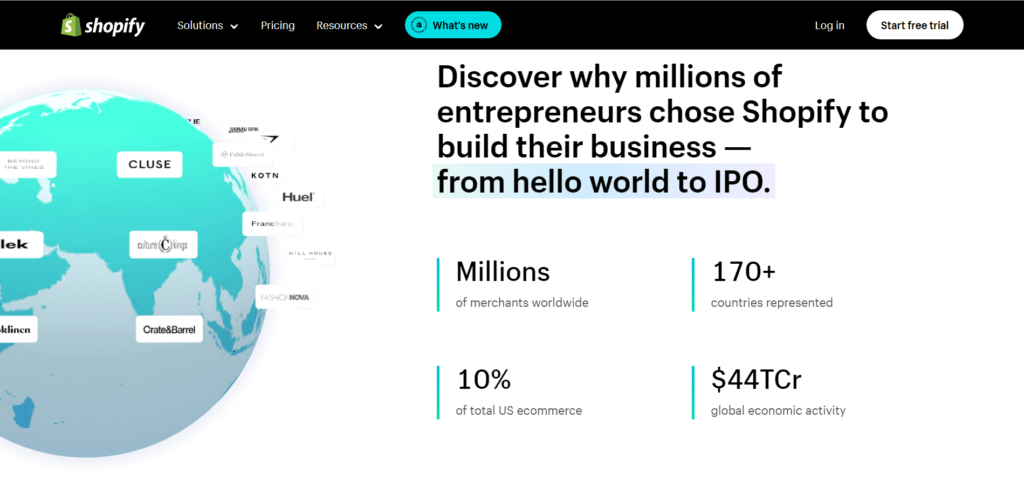
Shopify is a complete “commerce operating system” designed for businesses that want to sell everywhere—online, in-person (POS), and across social media. While it is user-friendly enough for beginners, it is powerful enough for global enterprises like Nike, Netflix, and SKIMS.
What makes Shopify different ?
- AI-Powered Operations: With Shopify Sidekick, you have a personal assistant in your dashboard. You can say, “Create a discount for my repeat customers,” or “Analyze why my sales dropped last week,” and the AI handles the work.
- Unmatched App Ecosystem: With over 13,000+ apps, you can automate almost everything—from “Abandon Cart” SMS sequences to AI-generated product reviews.
- Global Selling Made Easy: Features like Shopify Markets automatically handle local currencies, duties, and languages so you can sell to a customer in Paris as easily as one in New York.
Key Data to Help You Decide (2026 Overview):
- Market Leader: Shopify holds nearly 30% of the US eCommerce market share, making it the most trusted platform in North America.
- Global Growth: It is currently the #1 choice for “Direct-to-Consumer” (DTC) brands in the UK, Australia, and India.
- Search Volume: Interest in “Shopify Developers” has surged, showing that more businesses are moving toward professional, custom-looking stores rather than basic templates.
Analyze These Factors Before Choosing:
- Transaction Fees: Remember that unless you use Shopify Payments, there is an extra fee per sale.
- The “App Trap”: While apps add power, they also add to your monthly cost. Choose only what you need.
- Speed vs. Design: Shopify is built for speed (SEO). While it is less “free-form” than Wix, it ensures your site loads fast enough to actually make a sale.
Candle Business – Selling Candles using Shopify – Discussion on 7:39 The Importance of a Website
Selling Sports Cards using Shopify – 10:29 eCommerce Platforms
For some of the websites built on Shopify, this data is provided by Shopify on their website example page :
- Mollyjogger: Purveyors of Ozark Legend & Other Fine Goods
- Leif Shop – Lifestyle Shop
- With Love From Brooklyn – The Best of Brooklyn Artisan Food
- Mobile Robot Sensors & Components Store
- Phoneloops — Phone Straps & Accessories
How to Use These Examples to Make Your Final Decision
Don’t just look at these websites audit them. Use these three professional strategies to see if Shopify (or any builder) can actually handle your business goals.
1. Conduct a “Technology Audit” (The Modern Way to Research)
Instead of just guessing what features a store uses, use a tool like BuiltWith or Wappalyzer.
- What to look for: See which specific Shopify apps they are using for email marketing, loyalty programs, or AI chatbots.
- Why it matters: If your top 5 favorite competitors are all using a specific “Product Recommendation” app, you’ll know exactly what you need to budget for to compete.
2. Run a Speed & Core Web Vitals Test
In 2026, Google prioritizes “User Experience” above all else. Use Google PageSpeed Insights to test the examples listed above.
- The Goal: Look for a Mobile Score of 80+.
- The Test: Pay attention to the Largest Contentful Paint (LCP). If these stores load in under 2.5 seconds, it proves that the platform can handle high-resolution images without slowing down your customers.
3. Perform a “Ghost Shopping” Session
Act like a customer and go through the entire funnel of a Shopify store from your mobile phone.
- The Cart Test: Add an item to your cart and leave the site. See if they send you an “Abandoned Cart” SMS or email. This shows you how effective their built-in marketing automation is.
- The Checkout Friction Test: Does it offer One-Click Checkout (like Shop Pay or Apple Pay)? In 2026, every extra click costs you money. If the checkout feels long or “clunky,” you may need to look at a different theme or platform.
4. Reach Out Professionally (Etiquette Tip)
If you decide to contact a store owner, don’t just ask “Is Shopify good?” They are busy business owners. Instead, ask a specific, high-value question:
“Hi [Name], I’m a huge fan of your store’s layout. I’m considering moving to Shopify and noticed you have a very smooth checkout—did you find the setup easy, or did you need a developer’s help for that specific part?”
4. WooCommerce Plugin– The Ultimate Choice for Content Creators & SEO
WooCommerce is an open-source WordPress plugin that transforms the world’s most popular blogging platform into a powerful eCommerce engine. As of 2026, it powers nearly 39% of all online stores, making it the undisputed king of flexible commerce.
Why it’s the “SEO Champion” of 2026:
- Native Blogging: Since it sits on top of WordPress, your “Store + Blog” integration is seamless. You can write deep, helpful guides and embed “Buy” buttons directly into your stories.
- Total Data Ownership: Unlike SaaS platforms, you own every byte of customer data. In a world where AI privacy is a concern, having your own database is a major business asset.
- Advanced Performance: Recent updates like High-Performance Order Storage (HPOS) have solved the “speed” issues of the past, making WooCommerce capable of handling enterprise-level traffic.
The Reality Check: Control vs. Maintenance While the core software is free, WooCommerce is a “DIY” (Do It Yourself) platform.
- The Setup: You are responsible for your own domain, security (SSL), and hosting. For a store that loads fast in 2026, you should avoid cheap “Shared Hosting” and opt for Managed WooCommerce Hosting.
- The “Plugin Puzzle”: You can add almost any feature (Subscriptions, Bookings, AI Chatbots) via plugins. However, be careful—too many low-quality plugins can slow down your site or cause “plugin conflicts.”
- Cost of Growth: Starting is cheap, but “scaling up” often requires hiring a WooCommerce developer to ensure your custom code stays secure and updated.
Choose WooCommerce If:
- You already have a WordPress blog with traffic.
- You want 100% control over your website’s design and data.
- Your marketing strategy relies heavily on SEO and long-form content.
- You want to avoid the “transaction fees” that platforms like Shopify charge.
Related:
Pros and Cons of using WordPress for your Website
How long does it take to build a WordPress website
5. BigCommerce.com – The “Open SaaS” Leader for High-Volume Scaling
BigCommerce provides enterprise-grade “cloud power” for serious sellers. While it is a hosted platform like Shopify, its “Open SaaS” philosophy gives you more technical flexibility. In 2026, it is the top choice for businesses that have complex catalogs or want to sell both B2B (Wholesale) and B2C (Retail) simultaneously.
Why BigCommerce is a “Growth Engine” in 2026:
- No Transaction Fees: Unlike many competitors, BigCommerce does not charge you a percentage of your sales. You keep more of your profit as you grow.
- Multi-Storefront Mastery: You can launch a US store, a UK store, and a dedicated Wholesale portal—all managed from one central inventory.
- Unmatched Site Speed: Because it is built on a “Cloud-Native” infrastructure, BigCommerce stores are famous for high uptime and lightning-fast loading speeds, even during massive holiday sales.
- Built-in B2B Tools: If you sell to other businesses, features like “Quote Management” and “Bulk Pricing” are built directly into the system—no extra apps required.
The Technology Advantage: BigCommerce allows for “Headless Commerce,” which is a big trend in 2026. This means you can use a high-end design tool for the “front” of your site (like WordPress or a custom React app) while using BigCommerce’s powerful engine to handle the “back-end” payments and security.
Choose BigCommerce If:
- You are a medium-to-large business planning to scale past $1M in sales.
- You want a platform with the most features built-in (reducing your reliance on expensive apps).
- You need to sell Wholesale (B2B) as well as to regular customers.
- You want to avoid transaction fees and have 24/7 technical support.
2. Strategy: Hire an Expert to Build Your Success

Building a website is easier than ever, but building a profitable business is complex. For many entrepreneurs, the smartest “ROI” (Return on Investment) comes from buying a 1-to-3-year platform subscription and then hiring a specialist to build it.
Think of it like this: You can buy the bricks and tools yourself, but hiring an architect ensures the house doesn’t fall down.
1. Why Hire a Specialist?
- Automation: An expert doesn’t just design; they connect your store to ERP (Enterprise Resource Planning) and CRM (Customer Relationship Management) tools so the store runs while you sleep.
- Conversion Rate Optimization (CRO): Experts know where to put the “Buy” button and how to speed up the checkout to reduce abandoned carts.
- Security & Compliance: In 2026, data privacy laws (like GDPR and CCPA) are strict. An expert ensures your site is legally protected.
2. Where to Find Your eCommerce Architect
In 2026, you have three primary paths to find the right talent:
| Hiring Path | Best For | Pros | Cons |
| Freelance Platforms (Upwork/Fiverr) | Specific Tasks | Global talent, competitive pricing. | Requires heavy vetting & management. |
| Official Partner Directories | High-Quality Builds | Pre-vetted by Shopify/Wix/BigCommerce. | Higher cost, often agency-based. |
| Local Experts | Long-term Partnerships | Easy communication, local market knowledge. | Limited talent pool in some areas. |
3. The “2-Week Trial” Rule
Before committing to a 3-month project, hire your chosen expert for a small, 1-week “Pilot Project.” * The Task: Ask them to optimize your homepage speed or set up one complex shipping rule.
- The Goal: Check their communication, speed, and technical depth. If they fail the small task, they aren’t the right fit for your big dream.
3. Custom Development: Building Your Own Digital Asset from Zero

If you want absolute control where every button, algorithm, and data point is owned by you you choose Custom Development. This is the most expensive and time-consuming method, but it results in a unique business asset that you can eventually sell or turn into a franchise.
The Tech Stack of 2026
Building from scratch means choosing a “Stack.” A common modern setup includes:
- Front-end: React.js or Next.js (for lightning-fast, app-like speed).
- Back-end: Python (Django/FastAPI) or Node.js.
- Database: PostgreSQL or MongoDB (for handling millions of customer data points).
- Infrastructure: AWS (Amazon Web Services) or Google Cloud.
The Reality of Costs and Teams
In 2026, the $1,000 estimate you mentioned is likely just the monthly maintenance fee for a custom site. A full build from zero usually starts at $10,000 to $50,000+.
- The Team: You aren’t just hiring a “coder.” You need a UI/UX Designer, a Front-end Developer, a Back-end Developer, and a QA (Quality Assurance) Tester.
- The Timeline: While a Wix site takes hours, a custom site takes 3 to 6 months to launch.
Why “Wait and See” is the Best Strategy
I strongly agree with your point: Do not start here. Unless your business idea requires a unique technology that doesn’t exist yet (like a new AI-fitting room or a proprietary biding system), starting with a website builder is the smarter move.
Pro Tip for 2026: Use the “10% Rule.” Once your store is profitable on a platform like Shopify or WooCommerce, set aside 10% of your monthly profit into a “Custom Development Fund.” When you reach a point where your platform’s fees are higher than the cost of hiring a developer, that is when you build your own system.
The Hidden Risk: Maintenance
When you build from zero, you are the IT department. If a payment gateway updates its security protocol and your code doesn’t match, your store stops working. With a custom build, you must have a developer “on call” 24/7 to handle bugs and security patches.
4. No-Code Platforms: The Middle Ground for Custom Power

No-code is the most exciting development in 2026. It sits perfectly between “Simple Builders” and “Hard Coding.” Platforms like Webflow, Bubble, and FlutterFlow allow you to build complex, professional applications by visually designing the logic and database.
Why No-Code is a Game-Changer in 2026:
- Custom Functionality: If you need a unique feature—like a custom product builder where users “assemble” their own gift box—No-Code makes it possible without a $20,000 developer bill.
- Complete Design Control: Unlike Shopify or Wix, which have some layout “rules,” No-Code platforms are a blank canvas. You have 100% control over the CSS and animations.
- Faster to Market: You can build a “custom-feeling” app in 2 weeks that would have taken a coding team 3 months.
The Learning Curve: A Warning
As you correctly noted, these tools aren’t “plug-and-play.”
- The Complexity: You don’t need to write code, but you do need to understand how databases and “if/then” logic work.
- The Audience: No-code is perfect for tech-savvy entrepreneurs or agencies who want to deliver high-end custom sites to their clients at a lower price point than manual coding.
Is No-Code right for your store?
If a standard template on Shopify feels too “boring” for your brand, but you don’t have the budget for a full team of Python developers, No-Code is your best friend. In 2026, many of the world’s fastest-growing startups are running entirely on No-Code foundations.
It is easy to get lost in the “features” of a platform, but remember: A website is just a tool; your strategy is the engine. Having the most expensive custom website in the world won’t matter if your marketing doesn’t connect with your customers.
Your website is the digital headquarters where you execute your business vision. Whether you are selling handmade goods from home or shipping thousands of units from a warehouse, your choice should depend on your long-term goals, your budget, and your technical comfort level.
Conclusion: Strategy Over Software
It is easy to get lost in the “features” of a platform, but remember: A website is just a tool; your strategy is the engine. Having the most expensive custom website in the world won’t matter if your marketing doesn’t connect with your customers.
Your website is the digital headquarters where you execute your business vision. Whether you are selling handmade goods from home or shipping thousands of units from a warehouse, your choice should depend on your long-term goals, your budget, and your technical comfort level.
Final Takeaway for Sellers:
- Don’t over-complicate at the start: It is better to launch on a simple builder today than to wait six months for a “perfect” custom site.
- Data is your gold: Whatever platform you choose, ensure you own your customer data. This is the only way to scale sustainably.
- Stay Adaptive: The eCommerce landscape in 2026 moves fast. If a system isn’t working for you after 6–12 months, don’t be afraid to migrate. Success belongs to the committed and the flexible.
Before you make a final decision, I recommend talking to an expert or a consultant to weigh the long-term costs against your growth plans. A 30-minute conversation today could save you thousands of dollars in migration costs next year.
Frequently Asked Questions (FAQs)
1. How much does it actually cost to maintain a website in 2026?
Beyond the initial setup, you should budget for recurring costs. For a small to medium store, expect to pay:
- Platform Subscription: $30–$100/month (Shopify, Wix, etc.).
- Apps & Plugins: $20–$50/month (for loyalty programs or advanced SEO).
- Domain Renewal: $15–$20/year.
- Marketing: Variable, but many small sellers start with $100–$300/month for basic ads.
2. Do I really need AI for my online store?
In 2026, AI is no longer optional if you want to stay competitive. You don’t need a robot, but you should use:
- AI Chatbots: To answer customer questions 24/7.
- AI Product Descriptions: To save hours of writing.
- AI Recommendations: To show customers products they actually want to buy, increasing your sales automatically.
3. What legal requirements should I know about?
Selling online means you are responsible for customer data. Even if you are a small home business, you must:
- Have a Privacy Policy page.
- Comply with GDPR (if selling to Europe) or CCPA (California) by letting users “opt-out” of data tracking.
- Ensure your site has an SSL Certificate (the padlock icon in the browser) to keep credit card info safe.
4. Can I sell on Instagram and my website at the same time?
Yes! This is called “Omnichannel Selling.” Platforms like Shopify and BigCommerce sync directly with Instagram, Facebook, and TikTok. When you sell an item on social media, your website’s inventory updates automatically so you don’t oversell.
5. How long does it take to see the first sale?
While you can build a site in a day, getting traffic takes time. Most new stores see their first “organic” sale (from someone they don’t know) within 30 to 90 days, depending on how much they focus on SEO and social media marketing.
6. Do I need to buy my own servers?
No. All the “Website Builders” mentioned in this post (Wix, Shopify, Squarespace) include Cloud Hosting. This means they handle the servers, security, and speed for you. You only need to worry about hosting if you use WordPress/WooCommerce or build a site from zero.