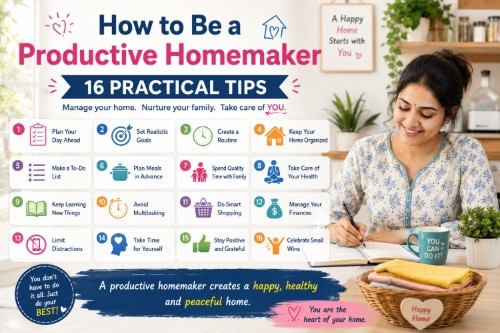
Being a productive homemaker isn’t about staying busy every minute of the day or completing an endless list of household chores. It’s about managing your home, time, health, family responsibilities, and personal goals in a way that feels organized and sustainable.
A simple routine, clear priorities, meal planning, time blocks, and realistic daily goals can make homemaking much easier. You don’t need a perfect schedule just a flexible system that works for your household.
In this guide, you’ll learn 16 practical ways to be a productive homemaker, including how to plan your day, manage household tasks, reduce distractions, make time for yourself, learn new skills, and even explore income opportunities from home.
How Can I Be More Productive as a Homemaker?
To be more productive as a homemaker, start by creating a simple daily routine and identifying 3–5 priority tasks for the day. Use time blocks for cooking, cleaning, family responsibilities, exercise, and personal work. Plan meals in advance, group similar household tasks together, reduce unnecessary phone distractions, and leave some buffer time for unexpected responsibilities. Most importantly, focus on consistency rather than trying to make every day perfectly productive.
- Choose 3 important tasks for the day.
- Plan meals and groceries ahead when possible.
- Group similar household chores together.
- Use time blocks for important activities.
- Keep some buffer time for unexpected tasks.
- Schedule time for rest, exercise, or hobbies.
- Review tomorrow’s priorities before ending the day.
Simple Daily Routine for a Productive Homemaker
There is no single daily routine that works for every homemaker. Family size, children, work, health, and household responsibilities can all affect your schedule. However, the following example can help you create your own routine.
| Time | Example Activity |
|---|---|
| 6:30–7:00 AM | Wake up, freshen up, quiet time or light exercise |
| 7:00–9:00 AM | Breakfast, family preparation and essential chores |
| 9:00–10:30 AM | Complete the day’s most important household tasks |
| 10:30–11:00 AM | Short break |
| 11:00 AM–1:00 PM | Meal preparation, errands or household work |
| 1:00–2:00 PM | Lunch and rest |
| 2:00–4:00 PM | Learning, hobby, freelancing or personal project |
| 4:00–7:00 PM | Family time and evening responsibilities |
| 7:00–9:00 PM | Dinner and light cleanup |
| After 9:00 PM | Relax and prepare priorities for tomorrow |
Don’t copy this schedule exactly. Use it as a starting point and adjust the time blocks according to your family’s routine. A useful schedule is one that reduces stress not one that creates more pressure.
1. Create a Simple Daily Routine
A daily routine gives structure to household responsibilities and reduces the time spent deciding what to do next. However, avoid planning every minute of your day. A homemaker routine works best when it provides direction while leaving room for unexpected tasks.
Start by dividing your day into broad blocks such as morning preparation, household chores, meal preparation, errands, family time, personal work, and rest.
How to Do It
- Write tomorrow’s important tasks the night before.
- Give demanding tasks a specific time block.
- Group similar chores together.
- Leave some free time between major activities.
- Move unfinished non-urgent tasks to another day instead of overloading yourself.
Practical Example
For example, instead of cleaning different areas throughout the entire day, you might reserve 9:00–10:00 AM for cleaning and then move on to cooking, errands, or personal work. Having a stopping point can prevent one household task from consuming the whole day.
Why It Helps
A simple routine can reduce decision-making during the day and make it easier to see which tasks actually deserve your time.
Learn More about:
- Essential skills to start your own online business
- Top 6 types of online business with examples that you can start
2. Set Your Top 3 Priorities for the Day
A long to-do list can make even a productive day feel incomplete. Instead of treating every task as equally important, identify three priorities that you genuinely want to complete that day.
How to Choose Your Priorities
Use three categories:
- Home: One important household task
- Family: One important family responsibility
- Personal: One task for your health, learning, work, or interests
Practical Example
Your three priorities might be preparing meals, completing the weekly laundry, and spending 30 minutes learning a new skill. Smaller jobs such as organizing a drawer or replying to non-urgent messages can wait until the priorities are complete.
Try the 3-2-1 Homemaker Method
A simple way to organize your day is the 3-2-1 method:
3 essential tasks
2 smaller tasks you would like to complete
1 activity for your own health, learning, or enjoyment
This keeps your daily to-do list realistic while still making room for personal growth.
3. Use Time Blocking for Household Tasks
Time blocking means assigning a particular part of your day to a type of activity instead of switching constantly between unrelated tasks.
For a homemaker, this could mean setting separate blocks for cooking, cleaning, errands, family responsibilities, exercise, and personal work.
Example
Instead of checking laundry every few minutes while cooking and answering messages, you could use 9:00-10:00 AM for household cleaning, 10:00–11:00 AM for meal preparation, and a later block for errands or personal tasks.
Keep It Flexible
Time blocks are guidelines, not strict deadlines. If a child needs attention or an unexpected responsibility appears, adjust the schedule rather than treating the day as unsuccessful.
4. Create a Weekly Cleaning and Home Management Plan
Trying to clean and organize everything every day can consume a large part of your time. A weekly home management plan can spread repetitive household chores across different days.
Example Weekly Homemaking Schedule
| Day | Main Household Focus |
|---|---|
| Monday | Laundry and bedrooms |
| Tuesday | Kitchen cleaning |
| Wednesday | Groceries and errands |
| Thursday | Decluttering and organizing |
| Friday | Bathrooms and pending chores |
| Saturday | Family tasks or larger household jobs |
| Sunday | Rest, light chores and planning the coming week |
This is only an example. If laundry needs to be done more frequently or grocery shopping happens on another day, adjust the schedule to suit your household.
5. Plan Meals and Groceries in Advance
Deciding what to cook several times a day can take more time and mental energy than expected. Basic meal planning can make grocery shopping and meal preparation more organized.
Simple Meal-Planning Tips
- Decide several meals before grocery shopping.
- Keep commonly used ingredients stocked.
- Prepare or chop suitable ingredients in advance.
- Keep a few simple meal options for busy days.
- Use leftovers safely where appropriate instead of automatically cooking from scratch.
Practical Example
For example, deciding the next day’s breakfast and lunch the previous evening can remove two decisions from a busy morning. You can also check whether the required ingredients are available before you need them.
6. Avoid Multitasking When Possible
Multitasking can sometimes feel productive, but constantly switching between unrelated activities can make it harder to stay organized. When possible, finish one meaningful task or one batch of similar tasks before moving to the next.
For example instead of alternating between cleaning, social media, bills, and cooking every few minutes, finish a defined cleaning task first and then move to the next priority.
Batch Similar Tasks
Examples:
- Pay several household bills together.
- Make your grocery list and place grocery orders together.
- Fold and organize laundry in one planned session.
- Reply to non-urgent messages during a designated break.
7. Reduce Phone and Social Media Distractions
Smartphones are useful for communication, shopping, banking, learning, and managing family activities, so completely avoiding them is neither necessary nor realistic. The goal is to reduce unplanned screen time during periods when you want to focus.
Try These Simple Changes
- Turn off unnecessary notifications.
- Keep your phone away during a focused task.
- Check social media at planned times.
- Use Focus or Do Not Disturb mode when appropriate.
- Avoid starting the morning with long periods of scrolling.
8. Make Time for Hobbies and Personal Interests
Homemaking responsibilities do not mean that personal interests have to disappear. Activities such as gardening, painting, sewing, writing, cooking, music, yoga, photography, or crafts can provide a meaningful break from repetitive household tasks.
Choose something you genuinely enjoy rather than selecting a hobby only because it might generate income.
Example:
If you enjoy gardening but have limited outdoor space, you might start with a few balcony plants rather than trying to create a large garden. Small, realistic projects are easier to maintain alongside family responsibilities.
9. Learn a New Skill or Continue Your Education
Learning can be a productive way to use regular free time at home. Depending on your goals, you might improve your computer skills, learn a language, complete an online course, prepare for an exam, or continue formal education.
If improving your digital skills is one of your goals, you can start with these practical ways to learn computer skills at home
Choose Skills That Match Your Goal
| Your Goal | Skills You Could Explore |
|---|---|
| Improve home management | Budgeting, meal planning, organization |
| Find remote work | Computer skills, writing, communication |
| Start freelancing | Digital marketing, design, writing, coding |
| Personal development | Language learning, reading, communication |
| Start a business | Marketing, bookkeeping, customer service |
Learn more: How to learn computer skills at home
10. Make Health and Self-Care Part of Your Routine
Self-care does not have to mean expensive spa treatments. It can be a walk, exercise, reading, adequate rest, enjoying a hobby, meeting a friend, or simply spending some quiet time alone.
Productivity becomes difficult to sustain when every available hour is reserved for other people’s needs or household work. Personal time should therefore be part of your weekly planning rather than something you consider only after every chore is complete.
11. Consider Genuine Work-from-Home Opportunities
Remote and home-based work can be useful for homemakers who want paid work without a traditional daily commute. Depending on your skills and available time, options may include online tutoring, customer support, virtual assistance, bookkeeping, writing, design, or other remote roles.
Be Careful With Job Scams
Be cautious of opportunities that promise unusually high earnings for very little work, ask for large upfront payments, or request sensitive personal information before a legitimate hiring process. Research the employer or platform before accepting remote work.
You can also review the FTC’s guidance on job scams to learn how to recognize common warning signs before accepting a work-from-home opportunity.
12. Build a Regular Reading and Learning Habit
You don’t need to read for hours to make learning part of your routine. Set aside a manageable amount of time for books, useful articles, educational videos, podcasts, or other reliable learning resources.
Choose subjects that support your current goals.
For example, if you want to manage household finances better, learn basic budgeting. If you want to start freelancing, spend your learning time developing a marketable skill.
Learn With Your Family
Educational documentaries and age-appropriate learning programs can also turn some family screen time into an opportunity to learn together. Topics such as science, nature, history, technology, and culture can be explored according to your family’s interests.
13. Explore Freelancing If It Fits Your Skills
If you already have a marketable skill or are willing to develop one freelancing can be a flexible way to work around household responsibilities. Common areas include writing, design, translation, digital marketing, programming, virtual assistance, and other professional services.
If you’re new to this type of work, first understand how freelancing works, including how freelancers find clients, offer services, and get paid for their skills.
Start Small
Avoid trying to master several freelance skills at once. Choose one service, create a few examples of your work, learn how clients typically hire for that service, and gradually build experience.
14. Start a Small Home-Based Business
If you enjoy creating a product or providing a service, a small home-based business may be worth exploring. Possible ideas include tutoring, baking, handmade products, tailoring, local meal services, consulting, or other services that match your skills and local demand.
If you’re unsure where to begin, explore some types of online businesses you can start and choose an idea that matches your skills, available time, and budget.
Before getting started, it can also help to understand the essential skills to start an online business, such as communication, marketing, customer service, basic financial management, and digital skills.
Learn the Business Basics
Before expanding, learn basic pricing, customer service, bookkeeping, digital marketing, and any licences, tax rules, food-safety requirements, or other regulations that apply to your location and type of business.
15. Use Some of Your Time to Support Your Community
f your schedule allows, volunteering can be a meaningful and productive way to use your time while contributing to your community. You can support a local NGO, school, community group, environmental initiative, animal welfare organization, or another cause that matters to you.
You can also use skills you already have such as teaching, cooking, organizing, mentoring, or helping with community events to make a useful contribution.
Start with a commitment that realistically fits your weekly routine. Even occasional volunteering can be valuable, and it should not add unnecessary pressure to your household responsibilities.
Example:
if you are good at teaching, you could dedicate a few hours each month to helping children with basic learning or supporting a local educational initiative.
16. Explore Content Creation as a Long-Term Project
If you enjoy teaching, writing, cooking, gardening, crafts, fitness, technology, or another subject, you can consider sharing useful content through a blog, YouTube channel, newsletter, or social platform.
Content creation can eventually lead to income opportunities such as advertising, affiliate marketing, sponsorships, services, or digital products. However, building a useful audience usually takes time and consistent effort, so it should not be treated as a quick or guaranteed source of passive income.
Start With What You Know
Choose a topic where you have genuine knowledge, experience, or a willingness to learn deeply. Focus first on helping a specific audience rather than trying to publish on every trending topic.
If you’re starting from scratch, first learn how to create digital content for blogs, videos, and other online platforms.