Travel agency website features play a crucial role in attracting visitors, improving engagement, and increasing conversions in the competitive travel industry., increasing engagement, and driving conversions in the competitive travel industry.
Many travel agency owners lack technical or digital marketing expertise but still aim to generate leads through their websites. Initially, this may not seem like a major problem. However, many travel agency websites fail to attract organic traffic or achieve satisfactory conversion rates, even when running Google Ads.
There are several reasons why this may happen:
1. Lack of Optimization
If your website is not optimized for search engines (SEO) or user experience, it becomes difficult for potential customers to find your agency information and travel package details.
Read more about this: A Comprehensive Guide to Fix Top 11 Common SEO Mistakes
2. Ineffective Marketing Strategies
Without digital marketing expertise, many travel agency owners struggle to create effective marketing campaigns or fail to target the right audience, which results in low traffic and poor conversion rates.
3. Poor Website Design
With various travel agency website packages available, ranging from ₹1,000 to ₹100,000, newcomers often struggle to choose the right option.
Website designers or developers often focus only on the technical aspects of the website, while marketing strategy is overlooked.
However, including elements just because competitors have them without understanding their strategic significance can prove ineffective. Every feature added to the website should be strategically aimed at generating leads, whether it’s encouraging social sharing, prompting subscriptions, facilitating form submissions, or inviting comments.
Technically, a website with slow loading speed, confusing navigation, poor readability, or missing details such as images, packages, maps, addresses, and registration information can discourage visitors and affect search rankings and conversions.
4. Insufficient Content
The more unique and high-quality content you publish or showcase on your website, the greater its chances of ranking higher on search engines. This results in gaining free organic traffic and potentially increasing conversions. Publishing travel-related blog content is extremely valuable for attracting visitors and potential customers to your website.
However, many travel agency websites lack unique and valuable content for visitors, which reduces their ability to attract organic traffic.
This occurs because many travel agencies offer similar package details; what Agency A includes, Agency B often includes as well. Copying travel package details from other websites can also create duplicate content issues and harm your search engine rankings.
Many travel agency owners who hire website design agencies encounter such issues, particularly if they rely on them for content creation.
Your content must be unique. Even if you provide less information, originality is more important than quantity. For added distinctiveness, consider showcasing itinerary details in Hindi, especially if your target audience is Hindi-speaking. Additionally, utilizing AI text conversion tools can help ensure some level of differentiation in your content.
Read More: Top 6 Benefits of having a blog on your website
5. Competition
Every agency owner wants to be on the top of search. However, the travel industry is highly competitive, and without a solid online presence and effective marketing strategies, it can be challenging for new travel agencies to stand out and attract customers.
Therefore, instead of relying only on your own efforts, it can be beneficial to seek help from digital marketing experts.
Like above points, there are several small challenges, technical things and problems that impact travel agency websites from attracting more traffic from search engines.
However, by addressing some fundamental aspects correctly, you can undoubtedly increase traffic and conversions. You may not agree with every point discussed, and that’s okay. After analyzing this information, you can choose or plan what’s best for your needs. Let’s get started.
The following travel agency website features help improve website performance, user engagement, search visibility, and lead generation for travel businesses.
14 Must-Have Features for a Travel Agency Website
Other than the having pages such as services, transportation, travel packages, itinerary, about us, and contact us, certain things are essential to enhance user experience, engagement, search engine ranking, and conversion.
1. Must-Have Enquiry or Booking Form on Home Page
Include a visible enquiry form on the home page where visitors can easily submit their queries or requests for tour package and pricing information. This is the main point of contact, so it should be clear, simple, and easy to use. Also ensure that the form is fully responsive and works well on mobile devices. This ensures visitors can easily submit enquiries from mobile devices.
2. Showcase Google Reviews on Website

Positive reviews serve as social proof, reassure potential travelers about the quality of your travel agency services and encouraging them to book tour package with your agency.
You can use Google Business Profile reviews or Google Map reviews directly on your website to build trust and credibility among visitors.
If you are using WordPress then with reviews plugins you can embed or integrate Google reviews onto your website, ensuring they are regularly updated to reflect the latest feedback from satisfied guests.
3. Display Your Top Selling Packages or Best Package at the Front
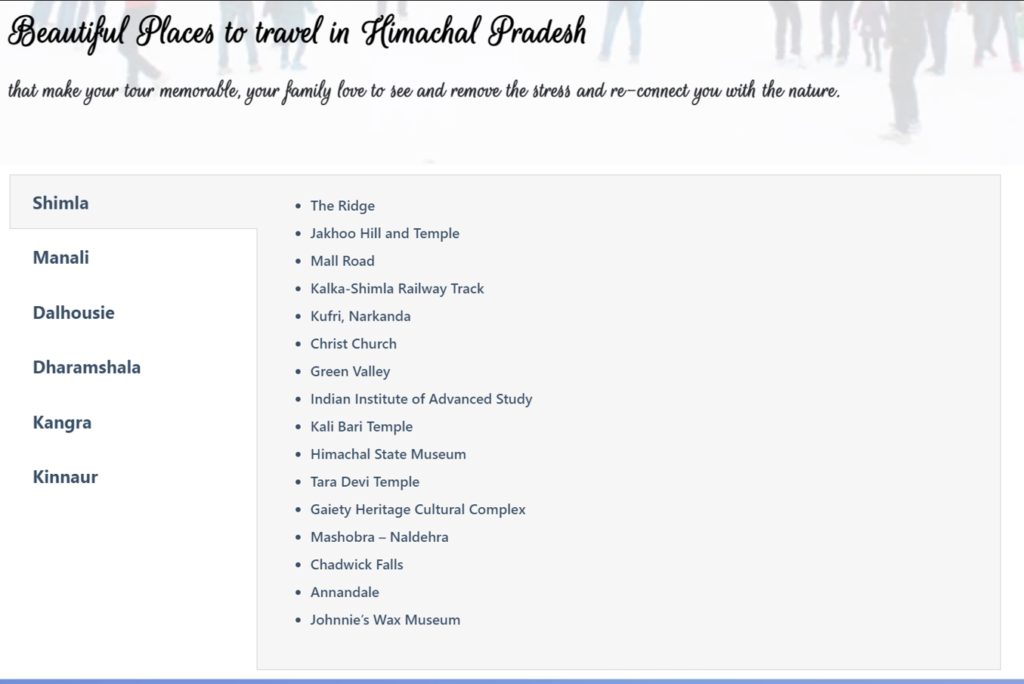
Highlight your most popular or best-performing travel packages prominently on the homepage. This helps capture visitors’ attention immediately and directs visitors towards high-converting travel offers, maximizing the chances of engagement and conversion.
If you are using WordPress for travel agency website then the best option that find a high-quality travel agency theme in which have home page design specifically focused on showcasing packages, enquiry form and reviews.
For WordPress, you can also use can use default WordPress block editor (Gutenberg) or elementor to design high quality, professional and engaging home page.
4. Showcase Packages as per Season – Such as Summer or Winter Packages
Create separate sections or categories on your website for different seasonal packages, this makes it easy for visitors to find and explore options aligned with their preferred
You can organize your travel packages according to seasonal themes, such as summer getaways or winter escapes.
5. Add Tourist Testimonials
Testimonials from satisfied customers who have previously booked and experienced your travel services serve as powerful endorsements. This help in building credibility and instilling confidence in prospective travellers. Overall, all this help in building trust or in getting mail for package enquiry or booking.
You can showcase testimonials prominently on your travel agency website, accompanied by photos or videos if available, to add authenticity and credibility.
6. Must-Have Travel Gallery Page
Visual storytelling enhances engagement and inspires trust, allowing visitors to visualize themselves experiencing your services. You can create a dedicated gallery page that showcases attractive images of destinations,destinations, tours, and travel experiences offered by your agency.
7. Must-Have a Blog
Blogging on your travel agency website will enhance your website’s visibility, attract organic traffic through search engines, and establish your authority and expertise in the travel industry.
Regularly publish high-quality blog posts optimized for relevant keywords and topics. You can write or publish informative and engaging blog post content related to travel tips, destination guides, and industry insights.
8. Website Needs to Load Fast
Fast loading times improve user experience, reduce bounce rates, and positively impact search engine rankings. So, ensure your website loads quickly and efficiently across all devices and platforms.
You can improve website performance by minimizing unnecessary plugins and optimizing images, compressing images, leveraging browser caching, and investing in reliable hosting server or company.
9. Provide Multiple Contact Information
Display various contact options such as WhatsApp, Facebook Messenger, email, and phone number so that if one contact method is unavailable or busy, visitors can easily reach you through another option, so that you don’t miss the potential customers or bookings. Apart from the contact page, display contact details clearly in the website header and footer.
10. Showcase Your Agency Registration Details
Include essential registration details such as Agency Reg. Number, PAN card, GST (optional), or any relevant licenses on website.
This demonstrates transparency and legitimacy, fostering trust and confidence among potential customers. You can display these details in the header or footer, but it is best to include them on the “About Us” or “Legal Information” page.
11. Provide Filter and Search Option
You can enhance user experience by implementing advanced filtering and search functionalities in your travel agency website such as destination, price range and seasons. This will help visitors to find relevant travel packages and increasing engagement and conversions.
12. Must Have FAQ at the End of Each Package

Include a comprehensive FAQ section at the end of each travel package page, addressing common queries and concerns.
This will enhance user experience and increase conversion by providing quick answers to potential questions regarding tour, rooms, or activities or itinerary.
You can compile a list of frequently asked questions related to each travel package, covering topics such as itinerary, inclusions, exclusions, booking process, and cancellation policies, and present them in an organized and easily accessible format.
13. Include Enquiry Form in Each Package or at the of itinerary
Include a dedicated enquiry form on each travel package page, after the itinerary, or in the sidebar so visitors can submit inquiries directly. This allows visitors to contact your agency immediately, increasing the chances of lead generation and conversions. Additionally, it facilitates A/B testing, allowing you to track which form or itinerary style is more engaging.
14. Must Have Landing Pages for Google Ads Search Ads
Many travel agencies use their homepage as the main landing page. However, dedicated landing pages allow you to promote specific packages to targeted audiences.
Having dedicated landing pages on your website enhances the effectiveness of your advertising campaigns of your advertising efforts by providing a focused destination for visitors who click on your ads.
This is very important to increase the likelihood of conversion.
You must optimize the content or offer on this page and messaging of your Google Ads search campaigns with relevant keywords. Which also include clear calls to action. Additionally, ensure proper tracking mechanisms are in place to monitor and analyse the performance of your ad campaigns.
Remember that each element plays a crucial role in enhancing user experience, improving search engine visibility, and ultimately, driving conversions.
Even small elements such as fonts or images should be selected based on your travelers’ needs, interests, and pain points.
By implementing these key components strategically, your travel agency website can attract more visitors, generate qualified leads, and increase both B2C and B2B travel bookings.
FAQ Section ?
1. What features should a travel agency website have?
A travel agency website should include enquiry forms, travel packages, testimonials, Google reviews, fast loading speed, blogs, and easy contact options to improve user experience and conversions.
2. Why is a blog important for a travel agency website?
A blog helps travel agencies attract organic traffic from search engines by publishing travel guides, destination tips, and informative content that travelers search online.
3. How can a travel agency website generate more leads?
Travel agency websites can generate more leads by adding enquiry forms, clear call-to-action buttons, Google reviews, testimonials, and well-optimized landing pages.
4. Why are Google reviews important for travel agency websites?
Google reviews build trust and credibility among potential travelers and act as social proof that encourages visitors to book travel packages.
5. How does website speed affect travel agency bookings?
A fast website improves user experience, reduces bounce rates, and increases the chances that visitors will explore packages and make bookings.
6. What role does SEO play in travel agency websites?
SEO helps travel agency websites rank higher in search engines, attract organic traffic, and generate free leads from travelers searching for tour packages.